We've Moved

Ecology of Absence now resides at www.preservationresearch.com. Please change your links and feeds.

Showing posts with label st. louis place. Show all posts

Wednesday, September 30, 2009

McEagle Picks Up Seventeen Parcels Including Six Historic Buildings

On September 25, the St. Louis Recorder of Deeds recorded the purchase of 17 parcels at Sheriff's land tax auction by McEagle Properties shell holding company Union Martin LLC. McEagle's companies had been dormant for several months.

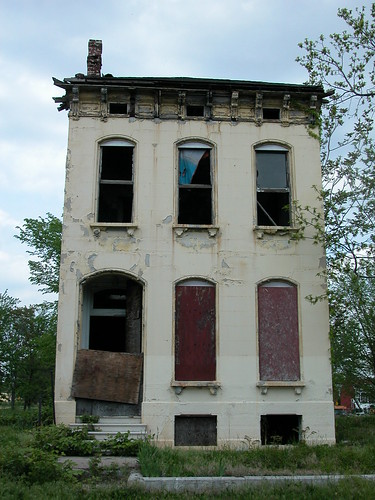
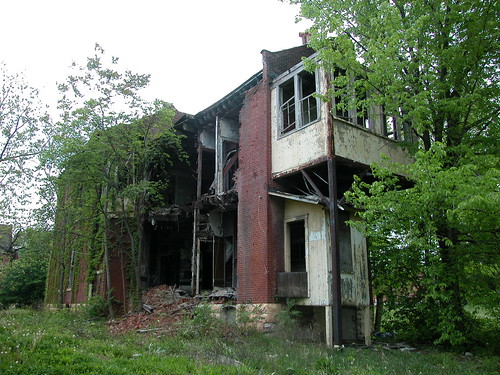
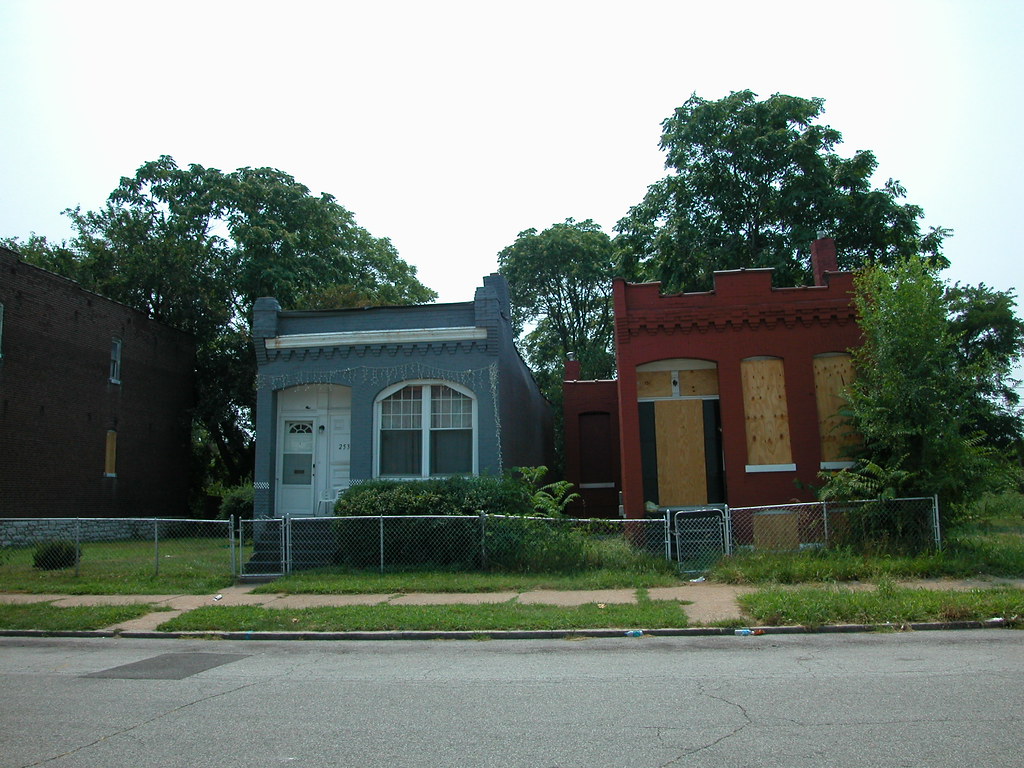
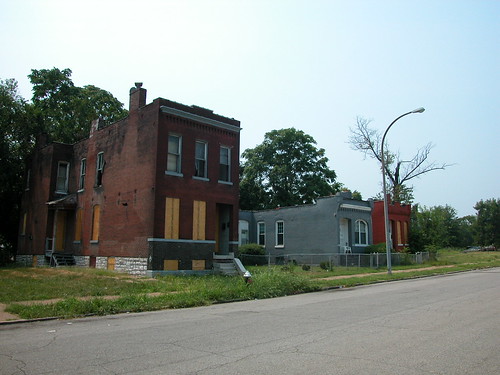
Among the purchase are seven residential buildings, of which six are historic. Here they are, with purchase price in parentheses if reported:

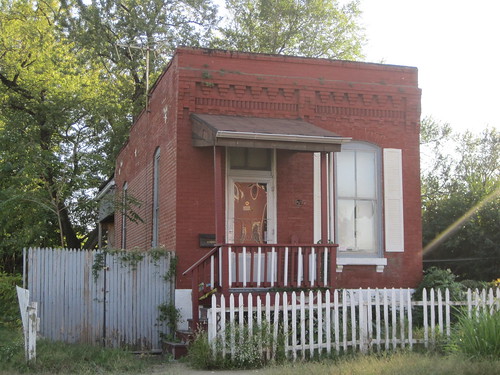
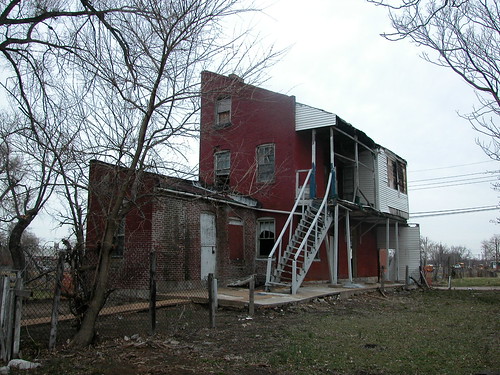
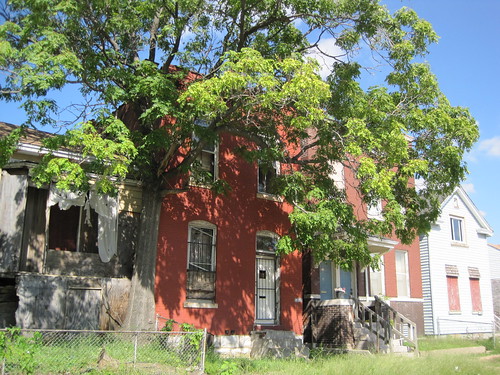
2823 University Street, brick house at left

2625 Palm Street in St. Louis Place

2212 Howard Street in St. Louis Place ($1,103.00)

2718 Stoddard Avenue in JeffVanderLou ($1,666.00)


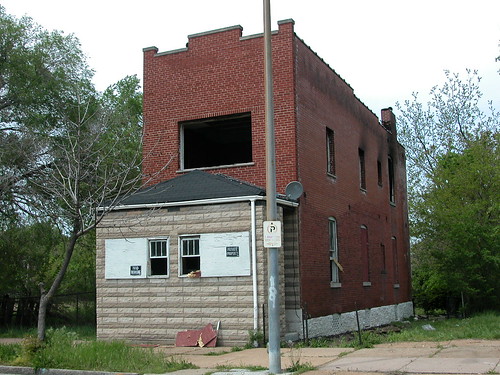
2834 Thomas Street in JeffVanderLou, shown at right


2571 Hebert Street ($1,561.00)

Why do I mention the purchase prices? I want to impress upon readers how easy it would be for other buyers to compete at the Sheriff's auctions for these properties. Community development corporations, neighborhood associations and other that want to keep out large-scale acquisition would do well to get some money together and head to the Sheriff's auction. Every month, dozens of north side parcels -- and historic buildings -- sell to speculators for low, low prices.

These acquisitions illustrate the thorniness of preservation planning in the NorthSide project. A week ago, preservationists thought they knew the pool from which the list of buildings to be rehabilitated would be drawn. In one day, that pool expanded. However, these buildings are in good shape and will be around for awhile. McEagle need not fear that preservationists have immediate demands beyond simply keeping these buildings from falling until there is a solid plan.

The remaining parcels recently purchased by Union Martin are located at 2516, 2518-20 and 2526 Slattery Avenue, 2930 James Cool Papa Bell (nee Dickson) Avenue, 2524 Coleman Street and 2832 Cass Avenue in JeffVanderLou; 3244 Knapp Street in Old North St. Louis; 2561 Hebert Street, 2231 and 2236 Benton Street and 1947-51 Wright Street in St. Louis Place.

Wednesday, September 2, 2009

Existing Employment in St. Louis Place Should Be Retained

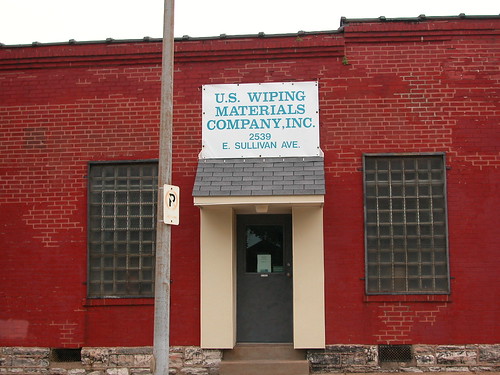
The website of St. Louis' own U.S. Wiping Materials Company, Inc. boasts that the company "has been in business for over 100 years. Being centrally located in St. Louis Missouri has allowed us the ability to provide cost-effective shipping in a timely manner to all of North America."

The central location for U.S. Wiping Material, manufacturer and distributor of towels, rags and wipers of all kinds, is a one-story brick industrial building at 2539 East Sullivan Avenue in St. Louis Place. Built in 1914, the building is a sturdy home to the company.

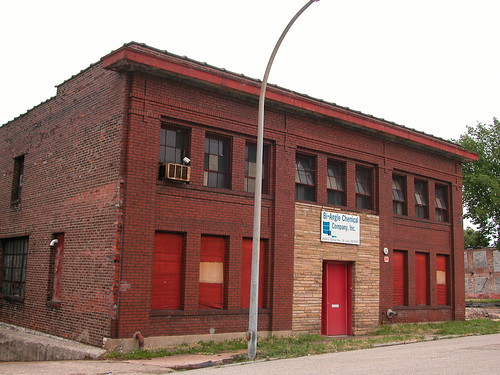
Next door to U.S. Wiping is the Bi-Angle Chemical Company, Inc. at 2531 East Sullivan Avenue. This plastics company is located in a handsome two-story Craftsman-style building built in 1916. The workforce is not huge, but workers can be seen all day on the back docks taking their breaks.

U.S. Wiping and Bi-Angle are located on a fairly deserted block between extra-wide Parnell Avenue and 25th Street, where Sullivan dead-ends at the Sullivan Place apartment complex. These companies' building are located within the proposed boundaries of McEagle's NorthSide project. While just outside of the boundary of one of the developer's proposed "employment centers," these employers may not be safe. A slide shown by McEagle on May 21, 2009 at Central Baptist Church shows these two building demolished. At the same meeting, McEagle chief Paul J. McKee, Jr. promised that McEagle would not move "a single job" out of the project area.

Of course, these companies might voluntarily sell to McEagle -- but that would mean the loss of jobs in the heart of St. Louis Place, a move the developer says it wants to avoid. U.S. Wiping and Bi-Angle provide jobs, pay earnings and real estate taxes and hold down the fort on a lonely block. These companies and their buildings should be retained as part of the new development, not courted for departure.

To the south, Hopmann Cornice Company faces destruction for the NorthSide project (see "What Happens to Hopmann Cornice?", June 3, 2009). Located on Benton Avenue between Parnell and Jefferson, Hopmann is located in a southern tail of the proposed "employmenmt center" and Benton Street is proposed for removal. While Hopmann employs a very small number of employees -- as few as two at times -- this is a family-owned business providing a highly specialized craft. The Hopmanns have survived in St. Louis Place since 1880, and their eviction would be a tragic end to a proud family legacy.

As a family-owned business, McEagle ought to be sympathetic to Hopmann Cornice and work around its small-footprint shop. After all, if the goal of NorthSide is to provide multi-acre business sites, how would retention of a 0.17-acre site impede any of the project goals? (The U.S. Wiping and Bi-Angle sites are 0.496 acres and 0.16 acres, respectively.)

Wednesday, August 12, 2009

The Precarious Condition of Two Beautiful Houses on St. Louis Avenue

Brick rustlers have returned to the lovely stone-faced house at 1930-6 St. Louis Avenue (see ""Who Would Destroy This Building?", January 7, 2007). Most recently a funeral home, the house was first built in 1873 by wholesale grocery merchant Bernhard Winkelmann. Winkelmann was one of the numerous new-money German-Americans whose lavish homes gave St. Louis Avenue the nickname "Millionaire's Row." Today, a different millionaire owns the property: developer Paul J. McKee, Jr. through holding company N & G Ventures.

The damage from 2007 concerned only a one-story flat-roofed addition behind the home, but this week's damage concerns the side wall of part of the house. Since joists run laterally and rest in the brick side walls of most 19th century buildings, this damage will eventually cause collapse of the roof and floors. However, the thieves have only struck an addition to the Winkelmann house's ell, so the original section is not yet damaged.

On May 21 and other occasions, McKee mentioned having a list of 60 "legacy properties" in his possession worthy of preservation. Is this house one of them? It should be. However, the list is a mystery to myself and many people in city government and the development world with whom I have discussed preservation issues related to the NorthSide project. We do know that the house at 1930 St. Louis Avenue made an official list that gives it undisputed historic status: the house is a contributing resource to the Clemens House-Columbia Brewery Historic District. It ought to be preserved, and McKee should secure it against further attack.

Across the street is another fine stone-faced house with a lovely wooden Italianate cornice. The house at 1925 St. Louis Avenue dates to 1879 and is owned by the city's Land Reutilization Authority (LRA). The house is outside of the present historic district boundary. The front looks ragged but sturdy, but a walk around the side reveals the sad truth.

The east side wall of the ell is in shambles, although the second floor and roof are holding on for now. The condition of this house raises a preservation question related to NorthSide that has not been widely discussed: what happens to the numerous vacant historic buildings within the NorthSide footprint not owned by McEagle Properties and its subsidiaries? Most of those buildings are on the list of needed properties that McEagle submitted to the city's Tax Increment Financing Commission in May. Is the building at 1927 St. Louis Avenue one of the 60 "legacy properties"? There ar emore than 60 historic buildings owned by McEagle worthy of preservation, and at least as many in the project area owned by LRA and other entities.

City officials should not wait for the list of legacy properties to set into motion a sensible preservation plan for the NorthSide project. If public financing is on the table, that can be leveraged to ensure that buildings like the two above can be mothballed for eventual redevelopment in future phases of the NorthSide project.

Thursday, June 11, 2009

A Hebert Street Story

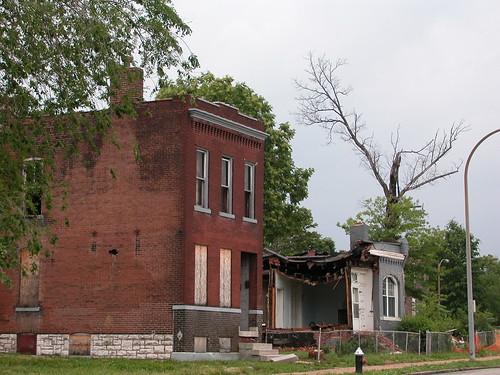
Our story starts in the heat of the summer, 2007. Two one-story shotgun houses sit on a block of Hebert Street between 25th Street and Parnell in St. Louis Place. Both houses have sat side by side since 1895, when they were built. On the left, 2530 Hebert Street is occupied by a family. On the right, 2532 Hebert is boarded up and has been owned by a holding company called N & G Ventures since December 2005. The overgrowth is evident, with tall woody growth and mosquitoes presenting a nuisance to the family next door.

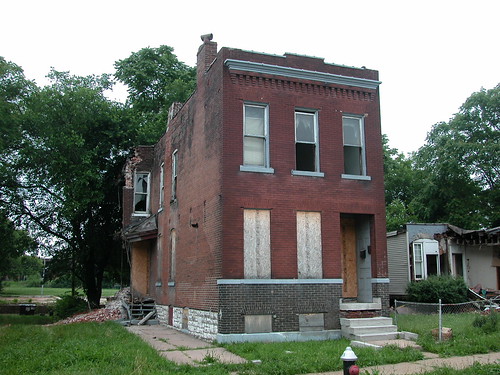
Draw back for a bigger picture, and we see that the two-story house to the east of the occupied house is also vacant and boarded. A company called MLK 3000 purchased that house in March 2007, requiring that its owner evict the tenants before the sale closed. We see that other buildings have fallen vacant and been demolished on this block, leaving vacant lots in varying degrees of maintenance.

The family living at 2530 Hebert Street have lived through tough times that got worse. In 2007, the identity of the holding company owner became public knowledge. McEagle Properties was buying land and buildings in north St. Louis for a large development. Details of the plan were unknown.

In May 2008, a string of arson hit this area of St. Louis Place. Ten vacant buildings went up in flames within a three day period. Police arrested a suspect who was released uncharged. No one has been charged with the arson. However, off the record officers say that the arsons were connected to the brick theft that has plagued north St. Louis for years and has escalated in St. Louis Place since 2006.

Perhaps it is not surprising that our family on Hebert Street sold their home to a McEagle holding company, Union Marin, in July 2008, for $75,000. Who else would have paid the family that much to relieve them of living on what had become a desolate block? They could have sold directly to McEagle for a decent price, or to one of the middle-man speculators who would have paid them $50,000 and sold to McEagle at $75,000.

Let's move forward a year and see what happened to the houses on Hebert Street.


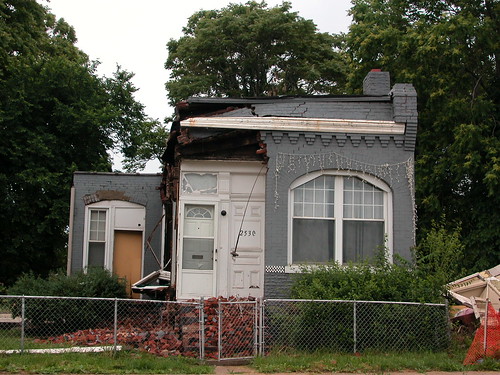
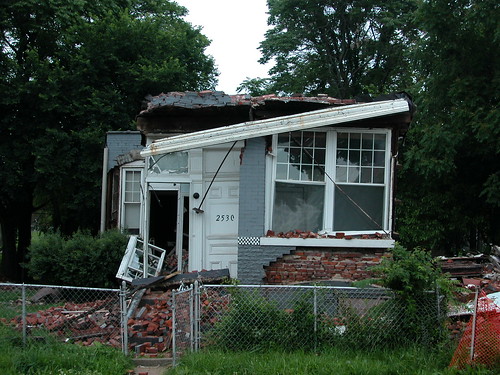
Ah, the brick thieves struck the fine little homes! On May 25, 2009, not only was 2532 Hebert Street reduced to a foundation, but the house that had been occupied less than a year earlier was down to three walls. That's what happens when there are no eyes and ears on a block to watch out for criminals.


The brick thieves have been striking this area for years, often taking their bricks to nearby dealers around 25th and University streets. The thieves work in broad daylight and on weekends, and yet few ever get caught by police.


No matter -- this week the house at 2530 Hebert Street is down to fewer than two full walls. The scene is garish, with the well-painted front doors and their decorative surrounds leading into a wrecked home. The water runs in the basement, where a washing machine can be seen. The sagging floors are ready to collapse any day now.


Next door, the formerly-solid two-story house has now been hit. The thieves have struck this house since May 25, because there was no damage evident then. What sort of city lets this sort of crime happen so brazenly? That's a question for another story.

Perhaps none of this matters at all: on the slides that McEagle showed at a meeting on May 21, this block was part of a large "employment center" where many extant historic buildings were replaced by large new ones. If the city assents to this plan through a redevelopment ordinance, many other buildings will disappear. However, the shocking and illegal campaign of brick theft is not a fair or civilized way to prepare the development area.

I hope that our story ends with the arrest and conviction of the thieves who destroyed the house son Hebert as well as the dealers who fence brick knowing the illicit source. In fact, a happy end would have the larger penalties assessed against those who profit the most from brick theft -- not the poor guys with pick axes, but the people who sell the brick out of town to build the McMansions of the Sun Belt. Then, we would have an open conversation about historic preservation and the McEagle project, reach consensus, watch a great project get built and all would live happily ever after.

Tuesday, May 12, 2009

McEagle Shows the Plan

Yesterday evening at Central Baptist Church, Aldermen Marlene Davis (D-19th) and APril Ford-Griffin (D-5th) held a meeting on McEagle Properties' large-scale redevelopment project centered around St. Louis Place and JeffVanderLou. McEagle's representatives made a presentation, including slides showing proposed land uses, before taking spirited questions from the crowd.

The bombshell dropped was that McEagle plans to submit a financial plan and tax increment financing plan to the city by May 26, and hopes to have a redevelopment ordinance approved by the Board of Aldermen by the end of the year. This project is on a fast track all of a sudden.

The St. Louis Post-Dispatch has an account here: "Residents get briefing on developer's long-awaited plan"

I'm going to withhold comment now and turn this post over to readers and people who attended last night's meeting.

What are your thoughts about the McEagle project, the proposed timeline and the forthcoming request for more public incentives?

Thursday, May 7, 2009

Lecture: The James Clemens House: Past, Present, Future

Volunteers for the Landmarks Association of St. Louis standing on the porch of the James Clemens, Jr. House in 1960.


"The James Clemens House, Past, Present and Future"
When: Sunday, May 10, 2009 at 2:00 p.m.
Where: Architecture St. Louis, 911 Washington Avenue #170

Join Michael Allen, Assistant Director of Landmarks Association, as he offers a look at one of the most significant endangered houses in St. Louis. Built in 1858 for James Clemens, Jr., the house at 1849 Cass Avenue is one of the few remaining antebellum mansions in the city. Later life included expansion of the house and use as a convent and several ministries. For the last decade, the fate of the vacant complex has been uncertain. Collapse of a chapel wall last year sent shock waves throughout the preservation community. Explore the fascinating history of this St. Louis landmark and discover what hope remains.

Lecture is free and open to the public, but reservations are requested, please call 421-6474.

The lecture is part of Preservation Week, a week-long series of events centered on historic preservation. The full schedule is online here.

Tuesday, May 5, 2009

Brick Thieves Return to St. Louis Place

By March 2009, things were not good for the unusual two-and-half-story flounder house located at 2543 Maiden Lane in St. Louis Place. The house was sporting a small hole at the base of its west wall as well as a major stress crack. The hole was strange because there was no apparent structural problem causing it. Urban Solutions, the consulting firm performing maintenance on behalf of owner McEagle Properties, placed one of its orange construction fences around the building in response to the conditions. Then the building just sat, with most window and door openings unsecured.

On April 2, the Building Division condemned the house for demolition, but so far has not placed the demolition out to bid.

The house stands out not only for a height rare for a flounder house, but also because it actually faced out toward Maiden Lane, an east-west street that is almost alley-like. The flounder sits on the north end of its lot, directly on the alley between Maiden Lane and North Market. The one-story flounder addition in front is a unique feature as well. The east side contains a gallery porch with access to the two flats inside of the building.


The north face shows the full height of the house, as well as some original six-over-six wooden window sash.


Last week, I noticed that the hole had grown bigger, with a pile of bricks at the base covered in lime mortar dust. I wondered if recent windy days had taken their toll until today, when I realized that a more common culprit is at work here.


That's right, the brick thieves are back in action. They have made short work of the one story addition, and have made the hole in the main house bigger (although their clumsy methods have broken many bricks).

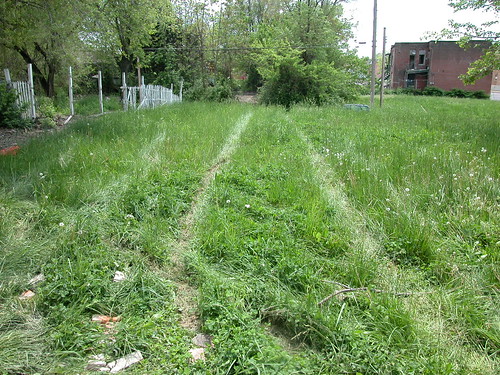
The tire tracks running through the high grass on the vacant lot next door provide clear evidence of thievery.


Strange that the thieves have evaded detection here -- the west wall faces out at busy Jefferson Avenue, not far from the police station. I'm also perplexed by the fact that of all of the brick buildings with wall damage in this vicinity, the thieves have struck this one. Is the recent condemnation for demolition a prompt? Perhaps the thieves saw the building on a demolition bid list.

In the middle of a flagging economy, brick theft could be elevated this summer. It's time for all of us to get tough -- city government, police and neighbors. If you see people removing bricks from a building and there is any suspicion of theft, call 911. If you have the constitution, take photographs of the activity and wait for police to arrive. Unfortunately, police will not always respond seriously to a brick theft call. A legitimate wrecker with demolition rights will be able to show police a demolition permit.

Let's hope this summer does not see a wave of destruction like the ones that hit the north side in the past two years.

Saturday, July 28, 2007

McKee to Rehab Clemens House?


A recent post on Urban St. Louis about the James Clemens House caught my attention:

A co-worker and I were out on the north side this morning and since he had his camera with him we decided to get some pics of the place. When we got there a man was walking around the property looking it over and talking on a cell phone. He asked who we were and said he was talking to the property owner who wanted to know who we were and why we were there. I took the phone and explained that we were just taking pictures. I asked if he really was the owner and he said that he was. I asked what he was planning to do with the place. He said he was going to rehab it. That he was accepting bids and that the work will begin in September.

Read more here.

Thursday, July 5, 2007

Teens Learning About, Producing Media in Old North St. Louis


(Teen participants in the Adventures in Media program stand in front of a mural on the 14th Street Mall designed and installed by The Urban Studio.)


Hopefully people are following along with the blog entries produced by the teenagers who are taking part in the Adventures in Media Teen Program. Sponsored by the Urban Studio, Trailnet and KDHX, Adventures in Media is a two-week program that examines the role of media in our dietary practices to demonstrate the nuts and bolts of how media is produced. Sessions take place at the Urban Studio, 2815 N. 14th Street in Old North St. Louis, as well other locations on the near north side. The Urban Studio is basically a storefront space reclaimed by imaginative neighborhood residents interested in using creativity to shape and strengthen community. It's one of the many bright spots making the near north side a lively and changing place to live.

One of the other places, the New Roots Urban Farm in St. Louis Place, is a logical part of this program. There, the teens learned a lot about the healthy, local organic food that isn't often promoted through mainstream media.

As part of the program, the teens are making some media of their own -- daily blog entries with photographs that chronicle this summer's experience.

Read those blog entries here.

Tuesday, May 23, 2006

Green House in St. Louis Place

The Rehabbers' Club hosted a tour on Saturday of a very interesting green rehab at 1871 Madison Street in St. Louis Place. The rehabbers are spending around $35,000 total and using their own labor and recycled materials to transform a strange, dilapidated house into one of the most unique living spaces in the city.

Here are photographs from Saturday's tour.

This project joins the Catholic Workers' Karen House, the restored Columbia Brewery complex, the Black World History Wax Museum and New Roots Farm as a reason not to discount the cultural future of St. Louis Place. While the architectural context on many of its blocks has been totally destroyed through demolition and horribly anti-urban infill housing, some people are using this devastation to experiment and transform in ways not possible in more intact neighborhoods. Of course, most people are using the devastation to build vinyl monsters, but the works of those people leave only an immediate wound. Projects like the house at 1871 Madison make their mark on the city's history.