We've Moved

Ecology of Absence now resides at www.preservationresearch.com. Please change your links and feeds.

Showing posts with label agriculture. Show all posts

Sunday, May 2, 2010

Farm House Facing Death In Belleville

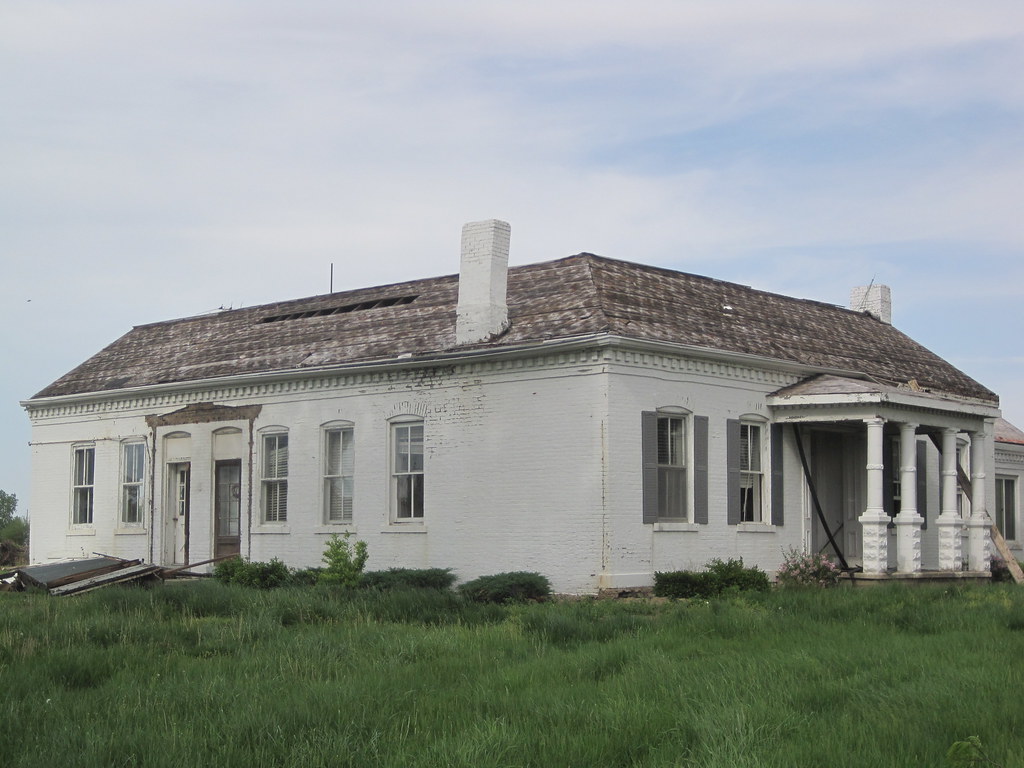
I have been conducting an architectural survey at Scott Air Force Base and passing back through Belleville. Last week, just east of town I came across this 19th century brick farmhouse on Highway 161 east of town. The rest of the farm -- a clay tile silo and some outbuildings -- are well under demolition, but work has yet to really start on the house. A porch and the roofing have been removed, but the old building is painfully still able to be saved. The demolition set me to thinking.

I know, I know. Illinois is full of these one-story brick center-hall houses, with their two-over-two wooden windows and simple brick cornices. Yet that's really the point: these vernacular houses give the state's rural areas unique architectural character compatible with the rich and lovely landscape upon which they reside.
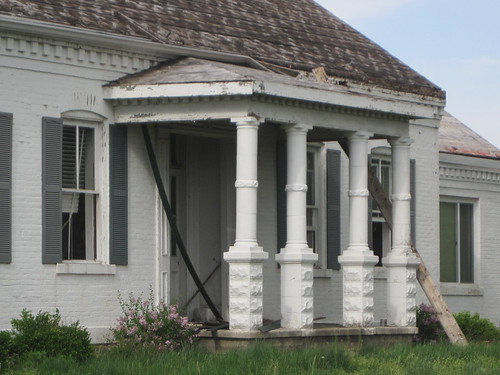
Besides, this house has an interesting hipped roof, and lovely cast stone porch columns (definitely not original, but certainly a historic alteration). With a new Wal-Mart and strip retail in this vicinity, I think I know what happens next to this farm. Even if one does not see the folly of the wasted building, what about thinking through losing soil that has fed people for over 100 years?

St. Louisans should think about these things too. What happens in Belleville matters to St. Louis. The loss of good farm land and usable farm building stock within 100 miles weakens our renewing regional food economy. We lost much of the good farm land in St. Louis and St. Charles counties, but we still have a lot left across the river. Some talk about "balancing" the region's sprawl, but without regional growth that is tantamount to doubling the waste: settled and unsettled areas, wasted. When do we stop?

Monday, March 8, 2010

Talk on Missouri Barns This Friday

Barn Again: Efforts to Document and Save Elements of the Rural Missouri Landscape

Noon, Friday, March 12 / Lecture Room / Architecture St. Louis / 911 Washington Avenue, Suite 170

Since joining Missouri Preservation as its Field Representative a little over a year ago, Bill Hart has been advocating for Missouri’s endangered historic resources. His position as Field Representative, a first for Missouri Preservation, is assisted by a Partners in the Field Challenge Grant from the National Trust for Historic Preservation. One of Bill’s outreach activities has included calling attention to the plight of the barn. Realizing that this is one of the most endangered building types not just in Missouri but throughout the nation, Bill has been photographing barns throughout the state (several hundred so far), keeping an eye toward at least providing quick photographic documentation of those that tenuously cling to the rural landscape. Bill has also been instrumental in organizing our state’s first barn alliance, which recently held its first meeting in conjunction with Missouri Preservation’s annual conference in Independence.

Wednesday, January 27, 2010

Missouri Rural Preservation Organization Launched

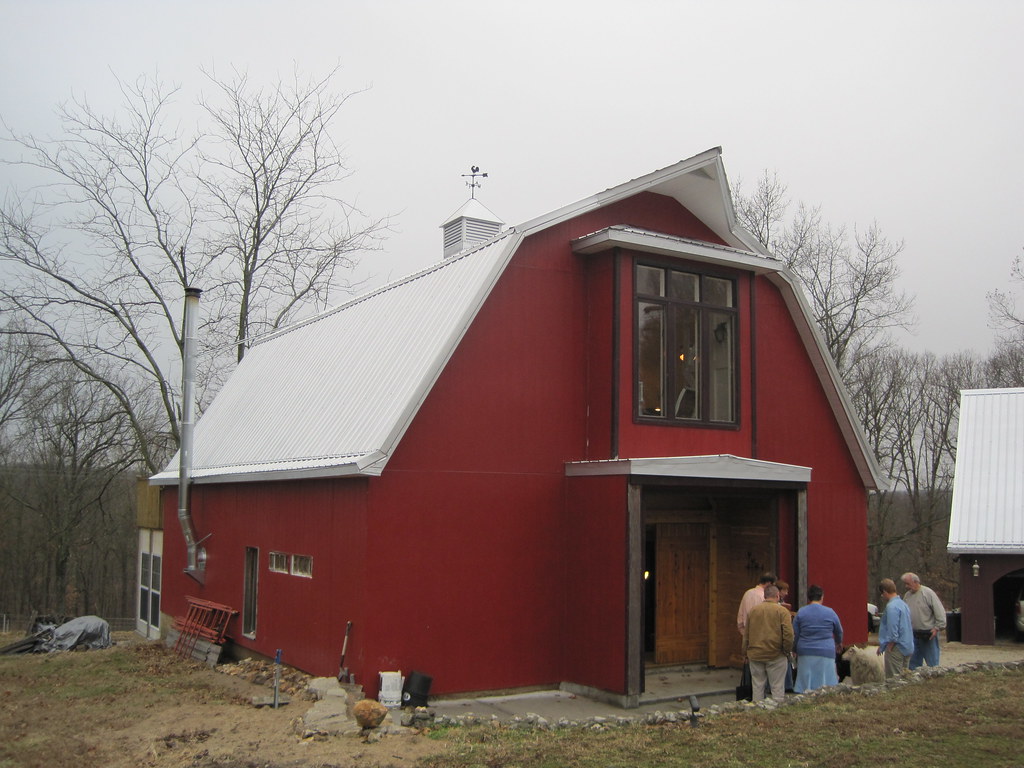
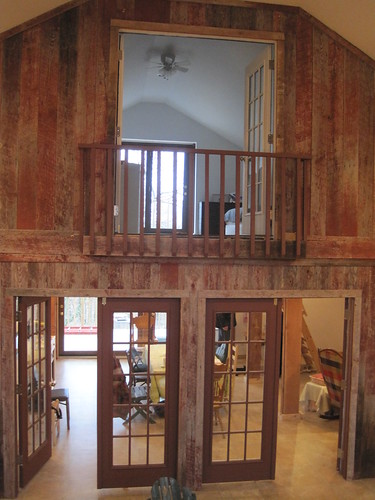
On Saturday, January 23, a group of barn owners, architectural historians and craftspeople met near New Bloomfield, Missouri, to discuss creating a new statewide preservation group focused on rural structures. Bill Hart, Field Representative for Missouri Preservation, called the meeting. Bill and Susan Miller graciously hosted the meeting at their home, a bright red barn that they have converted into a unique home. The group had the honor of the wise counsel of Osmund Overby, the dean of Missouri's preservation movement, and farmer and humorist Lewis Baumgartner, the "World's Worst Farmer."

Meeting participants decided to launch a new organization, the Missouri Barn Alliance and Rural Network. Preliminary goals include a statewide survey of barns and farms, educational programs and development of a resource clearinghouse for owners of rural structures in need of technical assistance and skilled contractors.

The group will meet again in early May. Those wishing to participate should send an e-mail to Bill Hart at billhartxx@aol.com. Additionally, Bill will be discussing the new organization and its goals at a brown bag lunch talk at Architecture St. Louis, 911 Washington #170, starting at noon on Friday, March 12th.

Friday, August 29, 2008

Small Victory for Sensible Agriculture

From the Marshall News-Democrat's story "Judge rules in favor of Arrow Rock CAFO opponents":

The future of confined animal feeding operations in Saline County is uncertain after Associate Circuit Judge Patricia Joyce ruled in Cole County Circuit Court Monday, Aug. 25, in favor of Arrow Rock opponents to Dennis Gessling's proposed CAFO two miles from the village.

The judgment specifies a 15-mile buffer zone around state historic sites in which CAFOs cannot be permitted and cannot operate.

Tuesday, August 5, 2008

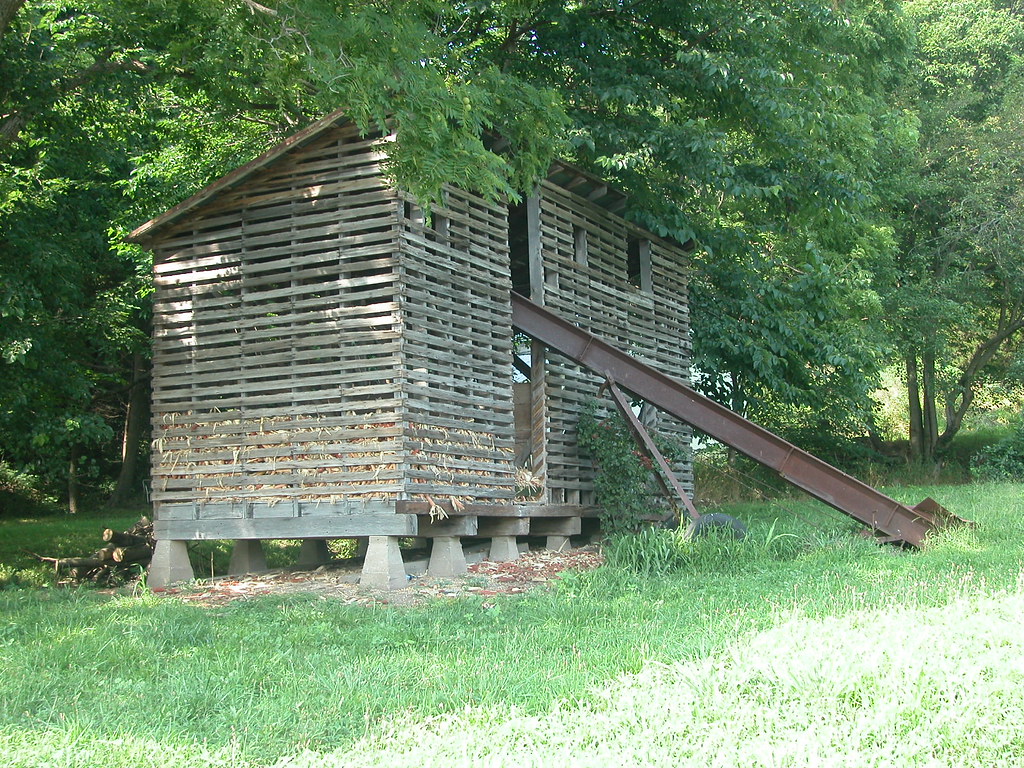
Monroe County Corn Crib Still in Use

While driving in Monroe County, Illinois recently, I was delighted to find an intact historic corn crib still in use. This crib stands on the east side of Bluff Road between Fults and Kaskaskia roads. Corn cribs are used for storing whole ears of corn for livestock feed. Due to the widespread use of processed feeds since the middle twentieth century, corn crib usage is very low and corn cribs are poised to become an extinct agricultural building type.

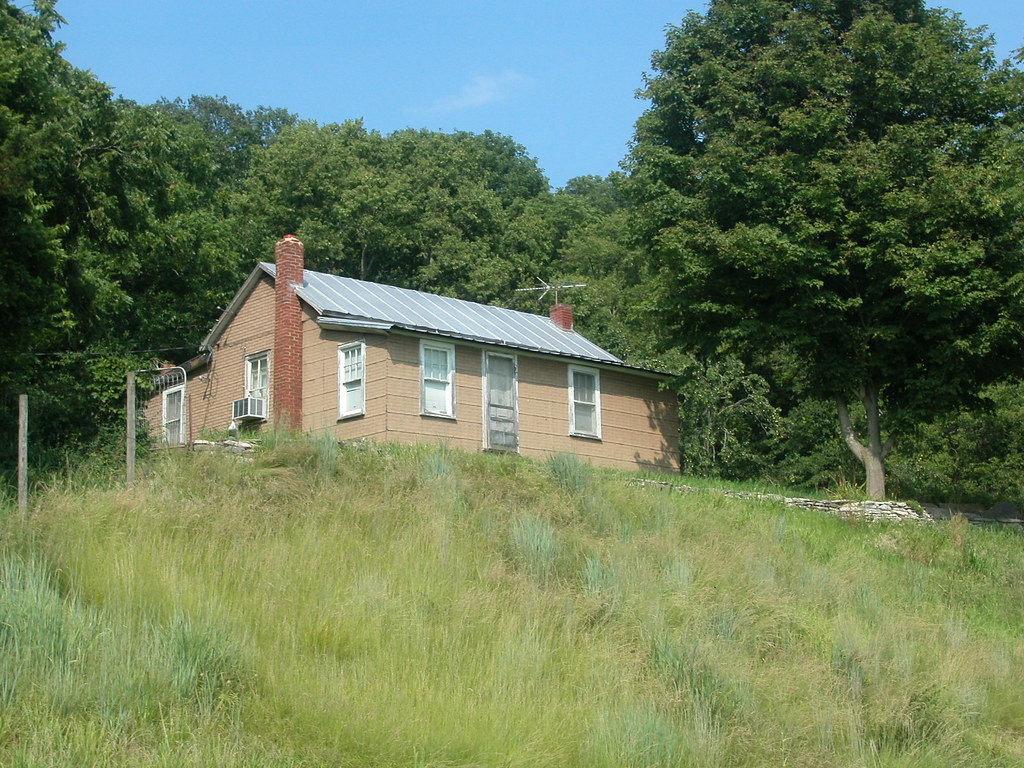
The corn crib is part of a farm that includes a historic one-story, side-gabled frame house, replete with standing-seem metal roof, wooden window sashes and two additions. That level of historic integrity is not entirely uncommon on surviving farmsteads in southern Illinois. Many have been clad in newer siding, like this one, but metal roofs and wooden doors and sashes are common. Some farms still believe in the adage "if it ain't broke, don't fix it." (Although I'm sure many farmers are simply working from "we're broke, so we can't fix it.")

Saturday, June 21, 2008

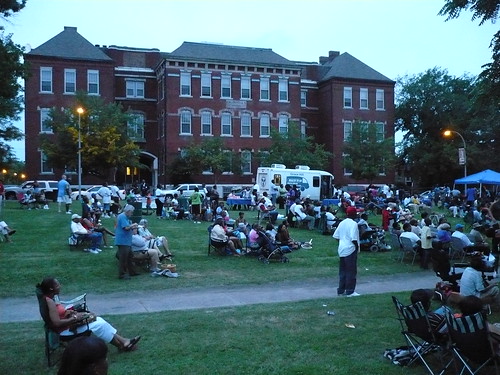
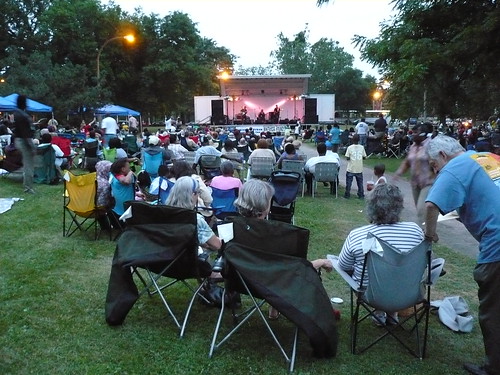
St. Louis Place Alive With Thursday Night Concerts


Headliner Kim Massie thrilled the large crowd at the Thursday kick-off of the Whitaker Foundation/Grace Hill Urban Evening Series at St. Louis Place Park in north St. Louis. Massie's blues-oriented programs deviated for a crowd-pleasing cover of Gretchen Wilson's "Redneck Woman," showing that music can knock down any supposed cultural divide. Gene Dobbs Bradford & Blues Inquisition opened.

This is the year for the series at St. Louis Place. St. Louis Place, laid out in 1850, is one of the city's oldest and most beautiful public parks. The music energized the neighborhood, with residents of Rauschenbach and 21st streets flanking the park hanging out on front stoops to get an earful of tunes.

Concerts run each Thursday at 7:00 p.m. in St. Louis Place through July 24; full schedule here.

The joy of Thursday night came on the heels of national publicity for the neighborhood to the east, Old North St. Louis. The acclaimed conservation group the Natural Resources Defense Council's blog featured a laudatory entry by its Kaid Benfield, director of the council's Smart Growth program. Benfield's post "Of the community, by the community, and for the community: the rebirth of Old North Saint Louis" celebrates the community-driven resurgence of downtown's northern neighbor.

Meanwhile, the North City Farmers' Market featuring produce from St. Louis Place's New Roots Urban Farm, started on Saturday, June 7 and runs through October 25. Each Saturday from 9 a.m. until noon, people can purchase fresh food and enjoy cooking demonstrations at the intersection of 14th and St. Louis in Old North.

On top of all of this, the Mississippi River flooding has avoided the popular North Riverfront Trail, which remains open and accessible east of Old North.

Residents of the near north side are having a great summer -- good music, the world's coolest urban trail, a farmer's market and awesome music usher in a pleasant season.

(Photographs by Lynn Josse.)

Friday, June 20, 2008

Land Use and Flooding

From "Iowa flooding could be man's fault, experts say" (Washington Post):

Between 2007 and 2008, farmers took 106,000 acres of Iowa land out of the Conservation Reserve Program, which pays farmers to keep farmland uncultivated, according to Lyle Asell, a special assistant for agriculture and environment with the state's Department of Natural Resources (DNR). That land, if left untouched, probably would have been covered with perennial grasses with deep roots that help absorb water.

Thursday, May 29, 2008

Factory Farming in Missouri

The Joplin Globe published an excellent article on confined animal feeding operations (CAFOs) in Missouri: "Study: CAFOs affect neighbors' property". These operations have been replacing traditional animal farms for years -- bringing with them debilitating conditions for animals, food packed with growth hormones with unresearched effects on consumers and now problems for neighboring human and animal populations through waste-water run-off. This is not to mention the number of family farms lost through factory farming.

In the St. Louis region, there are many CAFOs in Illinois counties like Monroe and Missouri counties like Jefferson and Lincoln. Urbanists often talk about stopping sprawl through growth boundaries and form-based zoning, but there is a much less frequently-addressed part of the sprawl question. If we stop the creep of the suburbs, what do we want the rural lands surrounding St. Louis to look like? What sort of land uses are sustainable and acceptable, if large subdivisions, strip malls, office parks and the like are out of the question? What jobs will people have?

Healthy agriculture is key to sustaining open land around the metropolis. Currently much of the land within our Standard Metropolitan Statistical Area is devoted to farming. As the energy crisis mounts, that amount of land may not change much. Yet "farming" as we know it has been altered to an unrecognizable world of factory farms, hormones, chemicals and corporations. Does agriculture in current practice serve the interest of a sustainable St. Louis region, or do we want to adopt a model that conserves our rich soil, sustains open space, preserves what's left of family farms and prevents the poisoning of surrounding land?